
If you missed my newsletter last week and/or didn’t sign up for this week’s webinar, you should. It should be a mandatory webinar for anyone who manages money for clients.
Understanding AI, its Limitations, and Learning about Tactical Mind AI
Webinar—October 21st at 3:00 p.m. EST
Rob Harbin, the co-founder of both TMAI (https://tacticalmind.ai) and the OnPointe software suite, is the featured speaker for the webinar. His knowledge of AI is unmatched, as he’s literally built the TMAI stand-alone AI tool. To attend the webinar, click on the following link:
https://tacticalmind.ai/lp/webinar-llms-vs-tacticalmindai
From the “Horse’s Mouth”
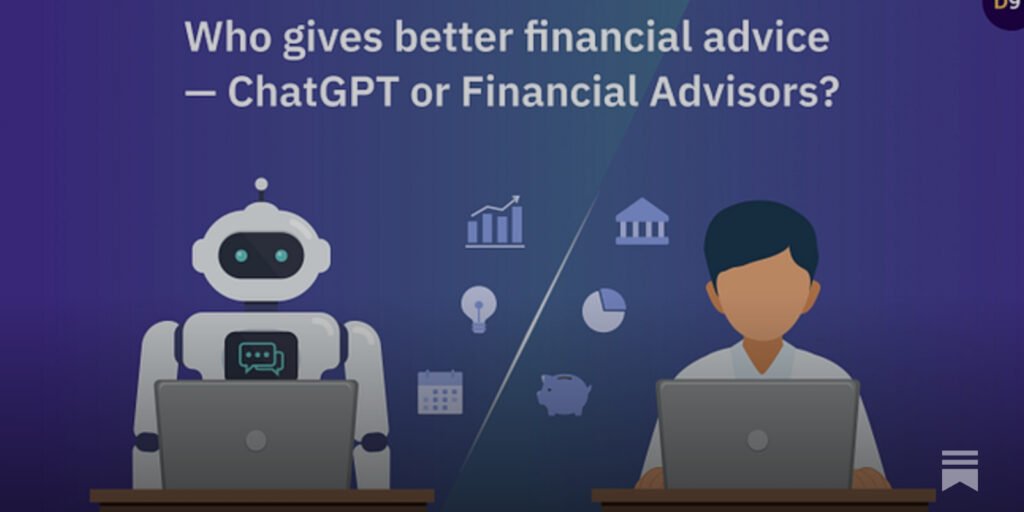
I asked ChatGPT (the paid/upgraded version ) to write a newsletter for me stating why itself and other large LLMs should NOT be used to make investment decisions/run portfolios for clients. It’s clear ChatGPT knows it shouldn’t be used!
Here are a few cites ChatGPT provided:
Evaluating Investment Logic in Large Language Models—August 2026
Across four leading LLMs, the researchers reported that investment reasoning sounded plausible—scoring around 4 out of 5—but its grounding in relevant market events scored only 0.8–2.8 out of 5. https://arxiv.org/abs/2608.06108
Can LLM Agents Trade Stocks Profitably in Real-world Markets? October 2025
Conclusion: Although current AI agents can be profitable, they rarely outperform simple benchmarks, revealing substantial room for improvement. https://arxiv.org/pdf/2510.02209
Why Financial Advisors Shouldn’t Let AI Chatbots Make Investment Decisions
With all the excitement surrounding artificial intelligence, financial advisors may be tempted to ask an AI chatbot for help making investment decisions.
Which stocks should I buy? Which ETFs should I sell? Should I change my mutual fund allocations?
Should I reduce equity exposure this month?
Tools like ChatGPT, Claude, Gemini, and other large language models can generate detailed responses to these questions. They can sound knowledgeable and present convincing arguments.
But the ability to discuss investments does not establish an ability to manage them.
General-purpose LLMs are not, by themselves, investment management systems designed and validated to make daily, weekly, or monthly portfolio decisions.
Understanding investments and deciding what to own are different tasks
An LLM can explain how an ETF works, summarize a company’s earnings report, or describe the differences between growth and value investing.
Those capabilities can be useful for education and research.
However, deciding whether to buy, hold, reduce, or sell an investment requires a repeatable process for evaluating opportunities and risks as conditions change.
An explanation of why a stock could rise does not establish whether it belongs in a portfolio today. A description of an ETF’s investment objective does not determine whether another ETF offers a better opportunity.
An investment explanation is not an investment strategy.
An allocation that looks reasonable on a screen still needs a defensible connection to the client’s circumstances.
Errors can be difficult to recognize—generative AI can produce inaccurate information, unsupported statements, and references that do not substantiate its conclusions. FINRA has identified accuracy, privacy, and bias among the concerns associated with these tools. FINRA Regulatory Notice 24-09
A portfolio requires more than a list of investments
Ask a chatbot to create a diversified portfolio, and it may return a selection of stocks, mutual funds, or ETFs with suggested allocations.
The result may look sensible. But a list of investments and percentages leaves critical questions unanswered:
- Why should these investments be owned now?
- What would cause their allocations to change?
- What would trigger a sale?
- How will replacement investments be selected?
- How will the overall portfolio’s risk be monitored?
An ongoing investment process needs answers to these questions before the next decision arises.
A portfolio generated in a conversation does not automatically come with that process.
Daily, weekly, and monthly decisions require continuity
Investment management is a continuing responsibility.
A decision made today needs to relate to the portfolio’s objectives, existing holdings, previous decisions, and rules for responding to new information.
A general-purpose chatbot conversation does not automatically provide a maintained investment universe, verified market data, consistent signals, portfolio constraints, and an ongoing monitoring process.
Even when a tool remembers earlier conversations, remembering what was discussed is different from systematically managing a strategy.
The advisor still needs a reliable method for deciding what changes—and what stays the same.
Access to financial information does not establish an investment advantage
Some LLM-based tools can access current information, analyze documents, and perform calculations.
That expands what they can help an advisor investigate. It does not, by itself, demonstrate that their buy, sell, or allocation recommendations improve investment outcomes.
Summarizing the latest economic news and deciding how to position a portfolio are separate tasks.
The investment question is whether a defined method can turn information into useful decisions consistently, with an understanding of its risks and limitations.
A persuasive answer to a prompt does not demonstrate that capability.
A market narrative is not a decision rule
There is usually a plausible argument for stocks to rise—and another for stocks to fall.
An LLM can articulate both.
For an advisor managing money, the challenge is deciding how much weight to assign each argument and what action, if any, should follow.
Should you reduce an allocation by 5% or 25%? Should you act today or wait? What evidence would cause you to reverse the decision?
A narrative can help explain a viewpoint. A strategy needs a defined way to translate evidence into portfolio actions.
Without that connection, an advisor risks trading on convincing commentary.
Better prompts do not establish a better investment strategy
Providing more context can improve the relevance of an AI response.
An advisor can specify the client’s objectives, investment restrictions, time horizon, and current holdings. The resulting answer may be more tailored.
But a more tailored answer is not proof of a more effective investment method.
A detailed prompt does not establish that the recommendations have been tested, that the allocation process is consistent, or that the proposed trading decisions offer value after costs.
Those qualities require evidence beyond the quality of the conversation.
Where general-purpose LLMs fit
For financial advisors, general-purpose LLMs can help explain concepts, organize research, summarize materials, and identify questions worth investigating.
The mistake is assuming those abilities also qualify the chatbot to decide which stocks, mutual funds, or ETFs to own—and when to change them.
Use a chatbot’s response as material to investigate. Making ongoing investment decisions requires a process whose methodology, consistency, and effectiveness you can independently evaluate.
You remain responsible for the recommendation
Investment advisers owe fiduciary duties to their clients. Broker-dealers making covered recommendations to retail customers operate under Regulation Best Interest. These are distinct standards, and a professional’s obligations depend on the capacity in which they act. SEC standards of conduct
Using technology does not make those responsibilities disappear. FINRA reminds its member firms that existing rules continue to apply when they use generative AI, including technology supplied by third parties. FINRA Regulatory Notice 24-09
Imagine explaining a portfolio change to a client after a substantial loss.
You should be able to explain the investment rationale, alternatives considered, risks evaluated, and reasons the decision fit that client.
“The chatbot recommended it” would leave those questions unanswered.
If you cannot explain and defend the investment decision without pointing to the chatbot’s authority, you are not ready to implement it.
Clients deserve an investment process that can withstand scrutiny. A confident AI answer is no substitute.
This Where Tactical Mind AI is Different!
Tactical Mind provides users with the investment research, specific reasoning behind its recommendations, and the methodology used. It’s NOTHING like using a large LLM like Claude or ChatGPT and is a one-of-a-kind technology in the AI space. Tactical Mind AI helps advisors document and demonstrate why each investment decision is made.
RoccyKnows YouTube Channel
Every week I’m posting a NEW YouTube video. Last week’s was on why Roth IRA conversions do NOT work for most people. This week’s a top 10 list of conversion mistakes most people (and their advisors) make.
To watch the NEW consumer YouTube video, click on the following link or video:
https://www.youtube.com/@RoccyKnows/videos